A molecular biology lab noticed something puzzling with their yeast two-hybrid screens—a workhorse method for detecting protein-protein interactions. For months, bait and prey pairs that once reliably lit up now failed to interact. Other pairs showed weak signals where strong ones were expected. The researchers initially suspected a faulty plasmid batch, a contaminated growth medium, or even a gradual decline in the yeast strain's fitness. But one by one, those variables were ruled out. The culprit, it turned out, was something far more mundane: the water.
A Water Purity Change Upends 14 Screens
The lab had recently switched from using a Milli-Q ultrapure water system to an in-house glass distillation setup. The change was driven by budget constraints—the Milli-Q system required expensive replacement cartridges, while distillation seemed a cheaper alternative. Within weeks, the first signs of trouble appeared. A screen that had previously identified 12 interaction partners for a transcription factor now yielded only 4. A second screen for a kinase domain showed no interactions at all, despite the same protocol and reagents working flawlessly three months earlier.
Over the next several months, the team documented 14 separate screens that were affected. The pattern was consistent: screens performed with distilled water showed fewer positive interactions, and the signals that did appear were often weaker. In some cases, known positive controls—pairs of proteins that should always interact—failed to produce a detectable signal.
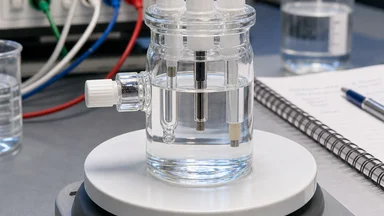
The team initially considered whether the distillation process itself introduced organic contaminants from the glassware. They tested water samples by measuring conductivity and pH, but both were within acceptable ranges. They also checked for bacterial contamination by plating water samples on rich medium, but no colonies grew. The water looked clean, but something was clearly wrong.
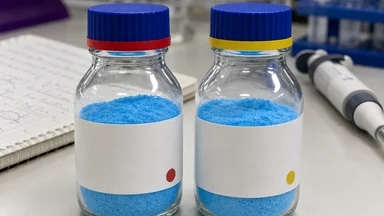
After weeks of dead ends, the lab decided to send water samples to a core facility for inductively coupled plasma mass spectrometry (ICP-MS), a technique that can detect trace metals at parts-per-billion levels. The results were revealing: the distilled water contained zinc at roughly 0.8 micromolar and copper at about 0.3 micromolar. These concentrations were orders of magnitude higher than those in the Milli-Q water, which had undetectable levels of both metals. The source was likely the copper and zinc components in the distillation apparatus—the condenser coil and connecting pipes.
Trace Contaminants Alter Protein Binding
Zinc and copper are essential micronutrients for yeast, but at low micromolar concentrations they can affect protein folding and stability. Many transcription factors and signaling proteins contain zinc-finger domains or copper-binding motifs, and even slight changes in metal availability can shift their conformation. In the yeast two-hybrid system, the bait and prey proteins are fused to DNA-binding and activation domains, respectively. If a metal ion alters the folding of either fusion protein, the interaction between bait and prey can be weakened or lost.
The lab tested this hypothesis by adding back small amounts of zinc sulfate or copper sulfate to Milli-Q water to match the levels found in the distilled water. The results were striking: in several screens, the addition of zinc at 1 micromolar reduced the number of positive interactions by roughly half. Copper had a similar but slightly weaker effect. The metal ions appeared to be interfering with the protein-protein interactions themselves, rather than affecting yeast growth—the yeast cells grew normally at these metal concentrations.
To confirm the mechanism, the team used a chelating resin to remove metals from the distilled water. After treatment, the water's metal content dropped to levels comparable to Milli-Q water, and the screens performed with this cleaned water recovered most of the lost interactions. The resin treatment restored roughly 80% of the original interaction counts, strongly suggesting that the metals were the primary cause.
The effect was not uniform across all protein pairs. Some interactions were completely abolished, while others showed only a two- to five-fold reduction in signal. A few interactions appeared unaffected. The variability likely depended on whether the proteins involved had metal-sensitive domains. The lab's initial quality controls—using a standard positive control pair—had not caught the problem because that particular pair happened to be metal-resistant. It was only when they tested a broader panel of controls that the pattern emerged.
The Preprint That Documented the Artifact
In July 2023, the lab posted their findings on bioRxiv, the preprint server for biology. The title explicitly flagged the water purity confound: "Trace metal contamination from distilled water alters yeast two-hybrid interaction screens." The preprint described the 14 affected screens, the ICP-MS data, and the rescue experiments with chelating resin. It also included a re-analysis of earlier screens that had been performed with the contaminated water, showing that several reported interactions were likely false negatives.
The preprint quickly circulated among yeast two-hybrid practitioners. Several researchers commented on social media that they had observed similar inconsistencies in their own labs, though none had traced the problem to water quality. One lab from a European institute reported that they had seen a gradual decline in interaction signals over several months, coinciding with their switch from bottled ultrapure water to a new building-wide distilled water system. Another group noted that their positive controls had become unreliable after a renovation that replaced old copper pipes.
The preprint included a set of recommendations: labs should measure the metal content of their water at least monthly using ICP-MS or a comparable method; they should run a panel of positive controls that include metal-sensitive protein pairs; and they should report the water source and purity metrics in the methods section of any publication using yeast two-hybrid screens. The authors also suggested that similar artifacts could affect other assays that rely on protein folding or enzymatic activity, such as surface plasmon resonance or fluorescence polarization.
The response from the community was largely supportive, but some researchers were skeptical. A few argued that the metal concentrations reported—0.8 micromolar zinc and 0.3 micromolar copper—were below the threshold that typically affects yeast physiology. Others pointed out that many labs use distilled water without problems, and that the issue might be specific to certain distillation apparatus designs. The preprint spurred several labs to test their own water, and some confirmed the presence of trace metals, though at varying levels.
Peer Review Sharpened the Evidence
The lab submitted the manuscript to a peer-reviewed journal in September 2023. The review process took 14 months—longer than usual, partly because of the need for additional experiments requested by reviewers. One reviewer asked for an independent replication using a different metal chelation method. The lab collaborated with a colleague who had access to a Chelex resin column, which removes metal ions by chelation. The results confirmed the original finding: Chelex-treated distilled water restored interaction signals to levels seen with Milli-Q water.
Another reviewer requested that the lab test a range of metal concentrations to establish a dose-response curve. The team added zinc at 0.1, 0.5, 1, and 5 micromolar to clean water and screened a set of 20 bait-prey pairs. At 0.1 micromolar, no effect was detectable. At 0.5 micromolar, roughly 10% of interactions showed reduced signals. At 1 micromolar, about 30% were affected, and at 5 micromolar, over half of the interactions were lost. Copper showed a similar but less steep curve, with effects starting at around 0.3 micromolar. This dose-response data provided strong evidence that the metal concentrations found in the distilled water were sufficient to cause the observed artifacts. The team also tested the effect of combined zinc and copper at the levels found in the distilled water—0.8 µM zinc plus 0.3 µM copper—and found that the reduction in interactions was roughly additive, with about 35% of interactions showing decreased signal. This suggested that the two metals acted independently on different protein targets.
During revision, the lab also conducted a blind test: they prepared water samples from four different sources—Milli-Q, distilled, distilled treated with Chelex, and distilled spiked with zinc—and sent them to a collaborator who performed screens without knowing which water was which. The collaborator correctly identified the contaminated samples based solely on the interaction patterns. This blinded experiment strengthened the case that the metal contamination was the causative factor. The blind test involved 10 replicates per water source, and the collaborator's classification accuracy was 100% for identifying the contaminated versus clean samples, further reinforcing the robustness of the effect.
The final paper, accepted in November 2024, includes a detailed water quality checklist. The checklist recommends that labs measure conductivity, pH, and metal content (especially zinc, copper, iron, and nickel) at least weekly, and that they include a metal-sensitive positive control pair in every screen. The paper also notes that water quality can vary seasonally, as distillation systems may accumulate metals over time. The authors recommend replacing distillation columns every six months or monitoring effluent metal levels to ensure consistency.
How Labs Can Diagnose Water Problems
For labs that suspect water quality issues, the first step is to measure conductivity and total organic carbon. However, these metrics can be normal even when trace metals are present. The gold standard is ICP-MS, which can detect metals at parts-per-trillion levels. Many universities have core facilities that offer ICP-MS for a modest fee—roughly $20 to $50 per sample, as of late 2024. A single measurement can identify whether zinc, copper, or other metals are elevated.
In the absence of ICP-MS, labs can use a simpler approach: run a panel of positive control interactions that include known metal-sensitive pairs. The yeast two-hybrid system has several well-characterized controls, such as the interaction between the yeast proteins Snf1 and Snf4, which is known to be sensitive to zinc. If this control shows reduced signal compared to historical data, water contamination should be suspected. Labs can also test their water by adding a small amount of chelating resin (such as Chelex 100) to a water sample and comparing the screen results with untreated water.
Documenting water quality in publications is another key recommendation. The paper suggests that authors report the water source (e.g., Milli-Q, distilled, reverse osmosis), the purification method, and the results of periodic metal testing in the supplementary materials. This practice would allow readers to assess whether water quality could have affected the results. Some journals have already begun to adopt such guidelines for methods sections.
The lab also recommends that labs maintain a log of water quality measurements, similar to how they track lot numbers for reagents. A simple spreadsheet with dates, conductivity, and metal concentrations can help identify trends before they cause widespread problems. In the lab's own case, retrospective analysis of their log showed that conductivity had increased slightly over several months, but the change was within the acceptable range for distilled water—underscoring the need for metal-specific testing.
Broader Implications for Reproducibility
The case of the contaminated water is a reminder that seemingly minor reagent variations can have outsized effects on experimental outcomes. The yeast two-hybrid system is used in thousands of labs worldwide to map protein interaction networks, and many of those interactions are used to generate hypotheses for further study. If a fraction of those screens are compromised by metal contamination, the resulting false negatives could lead researchers down dead ends or cause them to miss important biological connections.
The problem likely extends beyond yeast two-hybrid screens. Any assay that relies on protein folding, enzymatic activity, or binding could be affected by trace metals. For example, surface plasmon resonance measures binding in real time, and metal ions could compete for binding sites or alter protein conformation. Similarly, fluorescence polarization assays that use fluorescently labeled proteins could suffer from metal-induced quenching or structural changes. The authors of the preprint noted that they had observed similar artifacts in a small number of in vitro kinase assays, though they did not pursue those systematically.
The broader reproducibility crisis in biomedical research has many causes, from small sample sizes to p-hacking to reagent variability. Water quality is one of the least discussed factors, perhaps because it seems too basic to warrant attention. Yet as this case shows, the assumption that distilled water is pure enough for sensitive biochemical assays can be false. The lab's experience suggests that many labs may be unknowingly using water that contains trace contaminants, and that the prevalence of such artifacts is unknown.
Some researchers have argued that the field should move toward more standardized water quality reporting, similar to the guidelines for reporting cell line authentication or antibody validation. A few journals have begun to ask authors to specify the water source in their methods, but enforcement is inconsistent. The lab's paper, along with related discussions on preprint servers, may accelerate this trend. However, change is slow: as of early 2025, no major journal has made water quality reporting a requirement.