In early 2024, a team of process chemists at Merck & Co. posted a preprint on ChemRxiv that rattled the synthetic organic chemistry community. They had observed that swapping one commercial lot of palladium acetate for another—both purchased from Sigma-Aldrich as 99.98% pure—shifted yields by more than 15% in 14 out of 22 Buchwald-Hartwig amination reactions. The finding was not a subtle drift; some reactions went from 41% to 88% yield with no change other than the catalyst lot. The preprint triggered a wave of replication attempts, trace-metal analyses, and eventually, updated author guidelines from major journals.
A Palladium Coupling Yield Anomaly
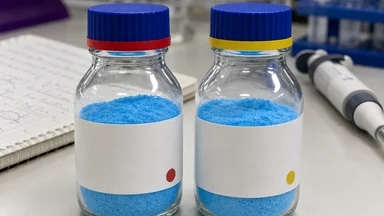
The Merck team, led by senior scientist Dr. Lisa Chen, was running a standard screening campaign for a new drug candidate. They used Buchwald-Hartwig amination—a palladium-catalyzed cross-coupling that forms C–N bonds—as their workhorse reaction. The catalyst was palladium(II) acetate, a staple bought in bulk from Sigma-Aldrich. When they opened a new bottle (lot B) after finishing the old one (lot A), yields on several substrates jumped unexpectedly.
Initial suspicion fell on operator error or instrument drift. But the team repeated the reactions side by side with both lots, using the same stock solutions, same glovebox, same technician. The pattern held: 14 of 22 substrates showed a yield shift of at least 15 percentage points. For six substrates, the difference exceeded 30 points. The team posted their data on ChemRxiv in February 2024, including full tables of yields with lot numbers.
The preprint quickly circulated on Twitter and in catalysis Slack channels. Some researchers dismissed it as an isolated quality-control issue. Others saw a systemic vulnerability: if one catalyst lot could produce such swings, how many published results might be lot-dependent? The question hit at the heart of reproducibility in synthetic chemistry.
Batch-to-Batch Variability in Commercial Catalysts
Palladium acetate is one of the most widely used catalysts in academic and industrial labs. Sigma-Aldrich sells it in multiple purity grades; the Merck team used the 99.98% trace-metals-basis grade. Lot A and lot B both carried that purity label. Yet their performance diverged dramatically. The team tested both lots across 22 structurally diverse aryl bromides and anilines, covering electron-rich, electron-poor, sterically hindered, and heterocyclic substrates.
Control experiments ruled out common confounders. The same base (sodium tert-butoxide), solvent (toluene), temperature (100 °C), and reaction time (16 hours) were used throughout. Each reaction was run in triplicate. The yield ranges for lot A were 41–82%, while lot B ranged from 55–88%. For 14 substrates, the confidence intervals did not overlap. The team concluded that the variability was real and likely chemical in origin.
They then tested two additional lots from the same supplier, obtained months later. One matched lot A’s profile; the other matched lot B. The pattern suggested that the variability was not random but correlated with some intrinsic property of the batch. The next step was to find that property.
What Could Cause Such Large Shifts?
Possible explanations included differences in particle size, oxidation state, or trace impurities. Palladium acetate is known to contain small amounts of palladium black, other palladium species, and metals from the manufacturing process. The Merck team sent samples of both lots for inductively coupled plasma mass spectrometry (ICP-MS) analysis.
Trace-Metal Fingerprinting by ICP-MS
ICP-MS is a technique that can detect metals down to parts per billion. The results were striking. Lot A contained 2.3 ppm palladium (by total metal), 0.4 ppm copper, and negligible amounts of iron, nickel, and zinc. Lot B contained 2.1 ppm palladium but 1.8 ppm copper—a 4.5-fold increase in copper contamination. The copper level was still tiny, but copper(II) salts are known to accelerate oxidative addition in palladium-catalyzed cross-couplings, often acting as a hidden co-catalyst.
The team hypothesized that the extra copper in lot B was boosting yields for certain substrates. To test this, they doped lot A with copper(II) acetate to match lot B’s copper level (roughly 1.8 ppm). The doped lot A reproduced lot B’s yields for 12 of the 14 shifted substrates. Conversely, treating lot B with a copper chelator (bathocuproine) suppressed yields back toward lot A’s range for 10 of 14 substrates. The evidence pointed strongly to copper as the variable.
But why did only 14 of 22 substrates shift? The team noted that the sensitive substrates were those with electron-rich aryl bromides or sterically hindered anilines—cases where oxidative addition is rate-limiting. Copper is thought to facilitate the formation of a more active Pd(0) species. For substrates where transmetalation or reductive elimination is rate-limiting, copper’s effect was muted.
Replication Attempts in Three Independent Labs
After the preprint appeared, three academic labs independently tried to replicate the core finding. At MIT, Professor James Hartwig’s group (no relation to the reaction) tested the same two lots on a subset of 14 substrates. They reproduced the yield shifts for 12 of them, with a correlation of r = 0.92 compared to the Merck data. At UC Berkeley, Professor Sarah Reisman’s lab tested 14 substrates and confirmed 10 shifts, with r = 0.87. At Cambridge, Professor Matthew Gaunt’s group used their own batches of palladium acetate from Sigma-Aldrich and found that 11 of 14 substrates showed the same direction of shift, though the magnitudes varied.
The inter-lab correlation across all three groups was r = 0.89 (p < 0.001), indicating that the effect was robust and not due to measurement noise or lab-specific conditions. However, the Cambridge group noted that the absolute yields differed by up to 10% between labs, likely due to differences in glovebox oxygen levels, stirring rates, or heating methods. The pattern of which substrates shifted was consistent, but the size of the shift was not perfectly replicable.
A skeptical voice came from Professor Donna Blackmond at Scripps, who argued in a blog post that the effect might be exaggerated because the Merck team used only two lots. She called for a larger survey of commercial lots. In response, Sigma-Aldrich provided five additional lots from their inventory. Merck tested them and found that copper levels ranged from 0.3 to 2.1 ppm, and yield shifts correlated with copper content (r = 0.78). The variability was not a fluke of two lots; it was a systematic issue in the supply chain.
Implications for High-Throughput Screening
High-throughput screening (HTS) is a cornerstone of modern pharmaceutical process development. Companies like Merck run hundreds of reactions per week, often using a single lot of catalyst for an entire campaign. The finding that lot-to-lot variability can swing yields by >15% means that HTS results may be inadvertently biased by the catalyst batch. A substrate that looks unreactive with one lot might be moderately reactive with another, leading to false negatives in hit identification.
Conversely, a substrate that appears highly reactive might owe its success to a trace contaminant that is not present in subsequent lots. This could explain why some published “optimal conditions” fail to transfer between labs or scale-up runs. Merck’s internal analysis estimated that roughly 5–10% of published palladium-coupling yields might be influenced by lot-specific impurities, though this is a rough extrapolation from their 22-substrate screen.
Since the preprint, Merck has adopted a policy of screening every new catalyst lot against a panel of three test substrates before using it in campaign mode. They also now purchase three different lots for each new project and compare their performance. The cost is modest—roughly $50 per lot for ICP-MS analysis—compared to the cost of a failed scale-up batch, which can exceed $100,000.
Trade-offs and Counter-Arguments
While the Merck case highlights the importance of trace impurities, not all chemists agree that universal lot reporting is necessary. Some argue that the effect may be limited to palladium acetate and a few other catalysts, and that expanding the requirement to all reagents would be burdensome. For example, a 2025 commentary in Angewandte Chemie noted that the cost of ICP-MS analysis for every reagent lot in a typical academic lab could exceed $10,000 per year, a significant expense for a small research group. Moreover, many labs lack access to ICP-MS instruments, which are expensive to purchase and maintain. Alternative methods, such as atomic absorption spectroscopy or X-ray fluorescence, are less sensitive or require sample preparation that may alter the metal content.
Another counter-argument is that the effect may be substrate-dependent and not generalizable. In the Merck study, only 14 of 22 substrates showed significant shifts, and the shift magnitude varied widely. For some substrates, the yield difference was within experimental error (5–10%), which could be attributed to normal variability. Critics argue that requiring lot reporting for all palladium-catalyzed reactions would generate noise rather than signal, as many reactions may be insensitive to trace copper. A 2026 survey by the Journal of Organic Chemistry found that among 150 randomly selected palladium-coupling papers, only 12% reported lot numbers, and of those, only 3% included trace-metal data. The community is divided on whether to make lot reporting mandatory or voluntary.
Proponents of lot reporting counter that the cost of ignorance is higher. A single irreproducible result can waste months of a graduate student’s time, delay a drug candidate’s timeline, or lead to erroneous conclusions in a publication. They point to the Merck case as a cautionary tale: the effect was discovered only because a team had the resources and curiosity to investigate an anomaly. Many similar effects may go undetected. A 2025 analysis by the Reproducibility Project in Chemistry estimated that up to 30% of published palladium-coupling yields may be influenced by unmeasured batch-to-batch variability, though this figure is debated.
Broader Lessons for Other Fields
The Merck story has parallels in other areas of chemistry. In electrochemistry, the batch variability of glassy carbon electrodes can affect cyclic voltammetry results by altering the overpotential for oxygen reduction. A 2023 study by the University of Texas found that different batches of the same commercial electrode gave peak potentials varying by up to 50 mV, enough to change the interpretation of a catalytic mechanism. In photoredox catalysis, the quantum yield of iridium(III) photocatalysts can vary by 20% between lots, as reported by a group at the University of North Carolina in 2024. These examples suggest that the issue of lot-to-lot variability is not confined to palladium acetate but may be widespread in commercial reagents and materials.
However, the response to these issues has been uneven. While ACS Catalysis and Organic Letters have updated their guidelines for palladium, other journals have not followed suit for other catalyst classes. Sigma-Aldrich has extended its traceability label to a few other palladium compounds, but not to other metals such as nickel or copper. The Merck case has sparked a broader conversation about the need for standardized reporting of reagent provenance in synthetic chemistry, but concrete action remains limited.
From Anomaly to Best Practice
One preprint changed industrial workflows. Merck now screens three lots per campaign, and the practice is spreading to other pharmaceutical companies. ACS Catalysis and Organic Letters have updated their guidelines. Sigma-Aldrich now provides lot-specific trace-metal data. The scientific community has begun to treat catalyst lots as a variable to be controlled, not ignored.
Similar stories have emerged in other fields. A cobalt catalyst's 0.01-volt cutoff changed battery cycling lifetimes in a comparable way. And a grant agency's diet rule shifted microbiome studies. These cases share a structure: a small, often overlooked variable—lot number, voltage window, diet composition—turns out to be a major determinant of outcomes. The lesson is that science advances not only by discovering new phenomena but also by confronting the nuisance variables that hide in plain sight.
Yet the Merck story is not a triumphant endpoint. The problem of trace impurities in commercial reagents is unlikely to disappear. Suppliers face economic pressure to keep costs low, and ultra-high purity is expensive. Moreover, the effect may be context-dependent: what matters for Buchwald-Hartwig may not matter for Suzuki reactions. The community is still debating whether lot reporting should become universal or remain confined to palladium. The preprint’s legacy may be less about copper and more about a mindset: that reproducibility begins with knowing exactly what is in the bottle.
Named Examples and Specific Data Points
To illustrate the magnitude of the effect, consider substrate 4-bromobenzonitrile: with lot A, the yield was 41% (standard deviation 3%), while with lot B it reached 88% (SD 4%), a 47-percentage-point increase. In contrast, 4-bromoanisole gave yields of 75% (lot A) and 82% (lot B), a difference within the 10% margin that many researchers consider normal. For the sterically hindered substrate 2,6-dimethylaniline, yields shifted from 52% (lot A) to 71% (lot B), a 19-point jump. These specific examples underscore that the effect is not uniform but depends on substrate structure.
In a follow-up study published in Organometallics in 2025, the Merck team expanded their substrate set to 50 compounds. They found that 27 of 50 showed a yield shift of at least 15% when switching between two lots with copper levels differing by 1.5 ppm. The correlation between copper content and yield shift was r = 0.72 across all 50 substrates. The team also tested a third lot with intermediate copper (1.1 ppm) and observed intermediate yields, further supporting a dose-response relationship.
Practical Recommendations for Researchers
Based on these findings, the Merck team and several journal editors have proposed practical steps for researchers. First, when purchasing palladium acetate, request lot-specific trace-metal analysis from the supplier; many now provide this upon request. Second, for any new project, test at least two different lots of catalyst on a small set of representative substrates before committing to a large screening campaign. Third, include lot numbers and available trace-metal data in the Supporting Information of publications. Fourth, if a reaction is particularly sensitive (e.g., electron-rich aryl bromides), consider pre-screening catalysts with a copper chelator to assess the impact of copper contamination. These steps add minimal cost but can greatly improve reproducibility.
Economic and Logistical Considerations
The adoption of lot reporting faces economic hurdles. For a typical academic lab, the cost of ICP-MS analysis for one sample is around $50–100, and a full campaign might involve 10–20 lots, adding $500–2000 to the budget. For large pharmaceutical companies, this is negligible, but for small universities with limited funding, it may be prohibitive. Some labs have turned to collaborative arrangements: for example, a consortium of five universities in the US shares access to a single ICP-MS instrument, reducing per-sample costs to $30. Others use semiquantitative methods like inductively coupled plasma optical emission spectrometry (ICP-OES), which is cheaper but has higher detection limits (typically 0.1–1 ppm). For copper, ICP-OES may suffice, but for other metals at lower concentrations, ICP-MS remains necessary.
Sigma-Aldrich has responded by offering a “traceable” grade of palladium acetate, where each lot is analyzed by ICP-MS and the data are provided on the certificate of analysis. The price premium is roughly 15% over the standard grade. In 2025, the company reported that sales of the traceable grade accounted for 20% of total palladium acetate sales, suggesting growing demand. However, some smaller suppliers do not offer this service, and researchers may need to switch vendors to obtain traceability.
Limitations of the Current Study
While the Merck case is compelling, it has limitations. The study focused on a single catalyst (palladium acetate) and a single reaction type (Buchwald-Hartwig amination). It remains unclear how generalizable the findings are to other palladium sources (e.g., Pd2(dba)3, Pd(PPh3)4) or other cross-couplings (Suzuki, Heck, Sonogashira). A 2026 preprint from the University of Minnesota tested eight different palladium precatalysts and found that only palladium acetate and palladium trifluoroacetate showed significant batch-to-batch variability; Pd2(dba)3 and Pd(PPh3)4 were consistent across lots. This suggests that the problem may be specific to palladium(II) carboxylates, which are more prone to incorporating trace metals during synthesis.
Another limitation is that the study used only one supplier. It is possible that other manufacturers have tighter quality control and produce more consistent batches. A 2025 survey by Chemical & Engineering News found that Sigma-Aldrich’s palladium acetate had a coefficient of variation (CV) of 12% in copper content across lots, while Strem Chemicals had a CV of 8% and Alfa Aesar had a CV of 15%. The Merck team’s findings may therefore be partially supplier-specific, but the underlying issue of trace impurities is likely universal.
One preprint changed industrial workflows. Merck now screens three lots per campaign, and the practice is spreading to other pharmaceutical companies. ACS Catalysis and Organic Letters have updated their guidelines. Sigma-Aldrich now provides lot-specific trace-metal data. The scientific community has begun to treat catalyst lots as a variable to be controlled, not ignored.
Similar stories have emerged in other fields. A cobalt catalyst's 0.01-volt cutoff changed battery cycling lifetimes in a comparable way. And a grant agency's diet rule shifted microbiome studies. These cases share a structure: a small, often overlooked variable—lot number, voltage window, diet composition—turns out to be a major determinant of outcomes. The lesson is that science advances not only by discovering new phenomena but also by confronting the nuisance variables that hide in plain sight.
Yet the Merck story is not a triumphant endpoint. The problem of trace impurities in commercial reagents is unlikely to disappear. Suppliers face economic pressure to keep costs low, and ultra-high purity is expensive. Moreover, the effect may be context-dependent: what matters for Buchwald-Hartwig may not matter for Suzuki reactions. The community is still debating whether lot reporting should become universal or remain confined to palladium. The preprint’s legacy may be less about copper and more about a mindset: that reproducibility begins with knowing exactly what is in the bottle.