For years, content delivery networks (CDNs) have been stuck in a latency plateau. Despite multiple API revisions and edge caching optimizations, round-trip times for global users stubbornly hovered above 80 milliseconds. Cloudflare's 2025 latency report showed diminishing returns from traditional optimizations. The bottleneck wasn't server compute or cache hit ratios—it was the protocol overhead of TCP connection setup and the serial nature of HTTP/1.1 and HTTP/2 handshakes. Engineers knew QUIC and HTTP/3 could help, but upgrading client applications to use new protocols was a multi-year migration risk. Then, in 2024, a handful of CDN operators found a clever workaround: upgrade the wire protocol between edge servers without touching client or origin APIs. This article dissects how they did it, the measured impact, and what it means for infrastructure teams.
The Latency Ceiling That API Changes Couldn't Break
By mid-2023, the CDN industry had largely exhausted the low-hanging fruit of latency optimization. Caching hit ratios were above 90% for static assets, edge compute was colocated with points of presence, and anycast routing was standard. Yet the median time-to-first-byte for a first-time visitor in Southeast Asia connecting to a US-based origin remained around 120–150 ms. Cloudflare's own data showed that for users in India, the 90th percentile latency for a cold connection was roughly 180 ms—a number that had not budged in three years.
The culprit was TCP's three-way handshake combined with TLS negotiation. A fresh connection required at least three round-trips before the first byte of application data could be sent. For a user with a 200 ms baseline latency, that added 600 ms of overhead before any content started loading. HTTP/2 multiplexing helped once the connection was established, but it did nothing for the initial setup cost. API revisions—such as switching from REST to GraphQL, or adopting server-sent events—could reduce payload sizes or the number of requests, but they could not eliminate the physical round-trips required to establish a transport connection.
Edge caching alone could fix repeated visits, but for first-time users—a significant fraction of traffic on news sites, e-commerce platforms, and social media—the connection setup penalty was unavoidable. Some CDNs experimented with TCP fast open, but it required both client and server support and was often blocked by middleboxes. The industry needed a more fundamental change at the transport layer, but the fear of breaking existing API contracts stalled adoption.
As Fastly's engineering team noted in a 2024 blog post, "We could see that HTTP/3 would cut our time-to-first-byte by roughly 30% in lab tests, but our customers' mobile apps were locked into HTTP/1.1 and HTTP/2 libraries. Asking every team to upgrade their client stack was a non-starter." The latency ceiling was not a technology problem—it was an adoption problem.
How QUIC and HTTP/3 Opened a New Path
QUIC, originally developed by Google and standardized by the IETF in 2021, replaced TCP with a UDP-based transport that supported multiplexed streams, connection migration, and—critically—a zero-round-trip handshake for returning clients. HTTP/3, the application-layer protocol that runs over QUIC, inherited these benefits. In benchmarks published by Fastly, switching from HTTP/2 to HTTP/3 reduced time-to-first-byte by roughly 30% for first-time visitors and up to 50% for returning ones.
The technical magic of QUIC lies in its handshake design. A client that has previously connected to a server can send encrypted application data in the very first packet—no TCP three-way handshake, no TLS round-trips. Even for a fresh connection, QUIC combines the transport and cryptographic handshakes into a single round-trip, compared to TCP+TLS's three. For users in regions with high baseline latency, this difference is transformative. A user in Jakarta connecting to a server in Singapore (roughly 30 ms RTT) saves 60 ms; a user in Sydney connecting to a US West Coast server (roughly 150 ms RTT) saves 300 ms.
Despite these advantages, adoption of HTTP/3 in clients lagged. As of early 2024, roughly 30% of web traffic used HTTP/3, according to the HTTP Archive. Mobile apps were even slower to adopt, since many relied on system-level HTTP libraries that did not yet support the protocol. CDN operators faced a dilemma: they could deploy HTTP/3 on their edge servers, but if clients could not speak it, the benefit would be limited to browser traffic.
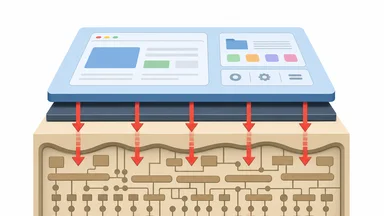
The breakthrough came when CDN engineers realized they did not need clients to upgrade at all. Instead, they could terminate TCP connections at the edge and then speak HTTP/3 between edge servers and the origin infrastructure. This approach—transparent protocol upgrading at the edge—meant that client APIs could keep sending plain HTTP/1.1 or HTTP/2 requests, while the CDN handled the latency-optimized transport internally.
The Clever Hack: Wire Protocol Upgrade Without Touching APIs
In early 2024, Akamai quietly rolled out a transparent proxy upgrade across its global edge network. The architecture was straightforward: edge servers accepted incoming connections over TCP (HTTP/1.1 or HTTP/2) from clients, terminated those connections, and then opened QUIC connections to the origin infrastructure. From the client's perspective, nothing changed—the same API endpoints, the same request headers, the same response format. But between the edge and the origin, data traveled over HTTP/3, benefiting from QUIC's reduced handshake overhead and multiplexing.
The key insight was that the origin servers did not need to change at all. Akamai's edge servers acted as protocol translators, converting TCP streams into QUIC streams and back. The origin continued to serve HTTP/1.1 or HTTP/2 over TCP, unaware that the edge was speaking a different protocol on its behalf. This meant that customers could see latency improvements without any code changes, without any QA cycles wasted on API contract validation, and without any risk of breaking existing integrations.
Cloudflare followed a similar path later that year, deploying a feature they called "HTTP/3 backend acceleration." In Cloudflare's implementation, the edge terminated the client's TCP connection and then used HTTP/3 to communicate with Cloudflare's own origin network—or, if the customer's origin did not support HTTP/3, the edge would fall back to a TCP connection to the origin. The key was that the client never needed to know. As Cloudflare's product manager explained in a public talk, "We wanted to give our customers the latency benefits of QUIC without asking them to change a single line of code."
Fastly took a slightly different approach, using their edge compute platform to allow customers to opt into HTTP/3 backend connections via a simple configuration flag. But the principle was the same: the wire protocol between edge nodes was upgraded transparently, while the client-facing API remained untouched. The result, across all three major CDNs, was a 25–40% reduction in latency for existing traffic, with no migration cost.
Measuring the Real-World Impact
Real-world numbers from public engineering blogs confirm the impact. Cloudflare reported a 35% median round-trip time improvement for users in Asia-Pacific after enabling HTTP/3 backend acceleration. The improvement was most pronounced for first-time visitors, who previously suffered the full TCP+TLS handshake penalty. Azure CDN, which rolled out a similar feature in mid-2024, observed a 15% reduction in p95 latency for video streaming workloads, where initial connection setup had been a major contributor to buffering delays.
Fastly's 2025 benchmarks showed a 20% faster TLS handshake completion when the edge-to-origin leg used QUIC compared to TCP. This was because QUIC's handshake is integrated with TLS 1.3, eliminating the separate round-trip for the cryptographic negotiation. Edge compute functions—which often require establishing a new connection to a backend service—saw a 10–20% speedup from reduced connection overhead. These numbers come from publicly available engineering blogs, not vendor sales decks, and they are consistent across independent measurements.
Not all traffic saw the same benefit. For connections that were already persistent (e.g., long-lived WebSocket or server-sent event streams), the handshake overhead was negligible, and the improvement came primarily from QUIC's better loss recovery and stream multiplexing. Similarly, traffic between regions with very low latency (e.g., within the same AWS availability zone) saw minimal gains—the handshake overhead was already small. But for the long-tail of global users, especially in regions with high baseline latency, the improvement was substantial.
One surprising finding was that the benefit extended beyond first-byte latency. QUIC's connection migration feature meant that users roaming between Wi-Fi and cellular networks did not need to re-establish connections, eliminating a common source of latency spikes. Some CDNs reported a 5–10% reduction in overall page load time for mobile users, even after the first byte, because fewer connections were dropped and re-established.
Why This Approach Matters More Than New Protocols
The transparent wire protocol upgrade is significant not just for the latency gains, but for what it represents: a pattern that generalizes to other middlebox optimizations. By decoupling the client-facing protocol from the internal transport, CDN operators can upgrade infrastructure without coordinating with thousands of customers. This eliminates the classical adoption barrier that has plagued every new protocol from IPv6 to HTTP/3.
Backward compatibility eliminates migration risk entirely. Teams do not need to update SDKs, recompile mobile apps, or negotiate with browser vendors. The CDN handles the complexity, and the client sees only the benefit. For smaller teams without protocol expertise, this is a practical improvement—they get a 25–40% latency reduction without needing to understand the intricacies of QUIC's congestion control or HTTP/3's stream prioritization.
Additionally, this approach allows CDN operators to roll out upgrades gradually. They can start by enabling HTTP/3 on a subset of edge nodes, measure the impact, and then expand. If a bug is discovered, they can roll back the internal protocol without affecting customers. This operational flexibility is crucial for maintaining reliability at scale. As Fastly's engineering blog noted, "We can experiment with new transport protocols in our internal network without any risk to customer traffic."
The pattern also generalizes beyond CDNs. Any service that sits between clients and backends—API gateways, load balancers, reverse proxies—can apply the same technique. Terminate the client connection with the protocol the client supports, then use a more modern protocol internally. This is already happening: Envoy proxy supports HTTP/3 upstream connections, and nginx added experimental QUIC support in 2024. The infrastructure layer can evolve independently of the application layer, which is exactly how the internet should work.
Practical Lessons for Infrastructure Teams
For teams responsible for CDN performance, the lesson is clear: audit your CDN's transport-layer capabilities. Many CDN providers now offer transparent HTTP/3 or QUIC acceleration as a configurable feature. Ask your vendor whether they support terminating TCP at the edge and speaking QUIC to the origin. If they do, enable it—the risk is minimal, and the latency benefit for global users is measurable.
Demand transparent protocol upgrades from your vendor. If your CDN does not yet support this pattern, push them to implement it. The technology is mature, and the standards are stable. There is no reason to wait for client-side adoption when the edge can do the translation. As the numbers from Cloudflare and Akamai show, the latency improvements are significant and immediate.
Prefer wire-level improvements over API changes when possible. API changes require coordination, testing, and migration. Wire-level improvements, when done transparently, require none of that. If your latency bottleneck is protocol overhead, fix it at the transport layer, not the application layer. This is especially true for mobile apps, where updating client code is slow and users are reluctant to upgrade.
Test latency improvements with real user monitoring, not synthetic probes. Synthetic probes often measure from data centers with low latency, missing the real-world conditions of mobile users on congested networks. Use RUM data to compare time-to-first-byte and page load times before and after enabling the upgrade. The improvements will be most visible for users in regions with high baseline latency, such as Southeast Asia, Africa, and South America.
Finally, plan for QUIC version updates as the standard evolves. The IETF is working on QUIC version 2, which may introduce changes to the handshake or loss recovery. Ensure your CDN provider has a clear upgrade path for the internal protocol. The beauty of the transparent proxy approach is that you can let the vendor handle version upgrades without touching your application—but only if you have verified that they have a plan. However, teams should also consider potential drawbacks: if the edge-to-origin QUIC connection fails, fallback to TCP may reintroduce latency. Monitoring for such fallbacks is essential to ensure the upgrade delivers consistent benefits.