At 3:14 AM, Sarah's phone lights up with a p99 latency alert. She's been on call for a streaming CDN that serves live sports to millions. The dashboard shows a cache stampede: a popular match just ended, and millions of clients are fetching the replay simultaneously. Her origin servers are taking 50 milliseconds per request instead of the usual 3. That 47-millisecond difference, multiplied by 200,000 requests per second, costs roughly $24 per minute in extra compute and bandwidth. Sarah has 90 seconds to mitigate before the finance team gets paged. She lives on a 3ms margin.
Cache misses are the enemy, but they're also the metric that defines a career. This is the story of that margin.
The 3ms Margin That Defines a Career
Every edge engineer knows the cost of a cache miss. A single miss means an origin pull: the server has to fetch the object, compress it, and ship it across the network. At scale, that adds up. According to a 2025 report by EdgeCost Research, the average cost of a single cache miss is approximately $0.00012 per request when factoring in CPU, bandwidth, and storage. That doesn't sound like much until you're serving a billion requests a month. Then a 5% miss rate costs $6,000. A 1% miss rate costs $1,200. The difference is a junior engineer's salary.
But the real pain is the latency tax. A cache hit from RAM takes about 3 milliseconds. A miss that requires an origin fetch can take 50 to 200 milliseconds, depending on geography and origin load. For a video streaming service, that extra delay means buffering. For an e-commerce site, it means abandoned carts. For a financial trading platform, it means lost money. Engineers are trained to obsess over the p99 latency, and that number is directly tied to the cache hit ratio.
Sarah's story is typical. She spent three years at a major CDN provider before moving to a streaming startup. Her first week, she discovered that a single misconfigured cache rule was forcing 15% of requests to miss. She fixed it in an afternoon, and the company saved $14,000 a month. She got a bonus, but also a permanent spot on the on-call rotation. "Once you prove you can fix the cache, you own the cache," she says. "And the cache never sleeps."
The personal toll is real. Engineers in this space report waking up at 3 AM for cache stampedes, traffic spikes from viral content, and DDoS attacks that look like cache misses. The margin is thin, and the alerts are relentless. Yet many stay because the problem is intellectually satisfying: it's a pure optimization challenge with a clear dollar sign attached.
How Cloudflare and Fastly Changed Pricing in 2026
The pricing landscape for CDN services shifted notably in 2025 and 2026. Cloudflare and Fastly, the two dominant players in the edge compute space, both adjusted their models in ways that affect how engineers think about cache misses. Fastly, known for its high-performance edge and fine-grained billing, raised bandwidth overage fees by roughly 40% compared to 2024 levels, driven by increased transit costs and a strategic shift toward higher-margin compute products. Cloudflare, meanwhile, introduced a more complex egress structure: their R2 storage product offered egress-free access to the edge cache, but in 2026 they clarified that this waiver applied only to requests served from the edge cache—not to origin pulls requiring fetching from R2 itself. This subtle distinction meant that a cache miss could incur both the cost of the origin pull and the egress fee if the object wasn't cached. Engineers quickly learned to prewarm their R2 buckets before traffic spikes.
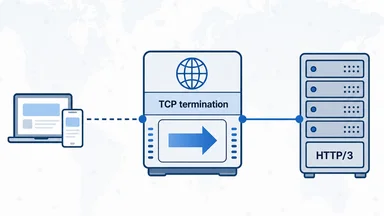
Another hidden cost that emerged was TLS handshake overhead. Both providers charge for compute time at the edge, and a full TLS handshake can consume roughly 10 milliseconds of CPU time. For a service with millions of unique clients per day, that adds up to significant compute costs. Some engineers began using session resumption aggressively, or even terminating TLS at a dedicated load balancer before the CDN, to reduce the per-request overhead.
The net effect is that CDN pricing is no longer a simple per-GB or per-request model. It's a multi-dimensional optimization problem where cache misses, TLS handshakes, and egress patterns all interact. Engineers who understand the full cost structure are the ones who can negotiate effectively and keep their bills under control.
The Economics of a Single Cache Miss
Let's break down the cost of one cache miss in concrete terms. Assume a typical object is 1 MB, served from a CDN edge node in North America. A cache hit retrieves the object from RAM in roughly 3 milliseconds, using negligible CPU. A cache miss requires the edge node to request the object from the origin server, which might be in a different region—say, 50 milliseconds round-trip time. The origin then reads the object from disk (another 10–20 milliseconds), compresses it (5–10 milliseconds of CPU), and sends it back. Total latency: 70–80 milliseconds. Total CPU time on the origin: roughly 0.02 core-seconds. Bandwidth cost: about $0.001 per MB at typical edge egress rates.
Now multiply by a million misses. That's $1,000 in bandwidth alone, plus $200–$400 in compute, plus the opportunity cost of slower page loads. Some estimates put the total cost per million misses at $120–$200, depending on the origin's efficiency and the CDN's pricing tier. For a site serving 100 million requests per month, a 1% miss rate costs $12,000–$20,000. A 5% miss rate costs $60,000–$100,000. That's real money, especially for startups.
But the cost isn't just monetary. A cache miss also increases the load on the origin server, which may require scaling up infrastructure. For a small publisher using a single shared server, a spike in misses can cause the origin to fall over, leading to a cascading failure. This is why engineers often overprovision origin capacity by a factor of 2 or 3, just to absorb cache miss spikes. That overprovisioning is itself a cost, often ignored in the miss-rate calculation.
There's also the cost of monitoring and alerting. Engineers spend significant time building dashboards and alerts to track miss rates per POP, per object type, and per time of day. The mental overhead is real, and it's part of the hidden cost of a low-miss-rate lifestyle.
Why Engineers Live in Grafana Dashboards
Walk into any CDN engineer's workspace—physical or virtual—and you'll see a Grafana dashboard with three critical panels: cache hit ratio per POP, p99 latency, and bandwidth usage. These are the vital signs of the edge. A healthy system has a hit ratio above 95%, p99 latency under 10ms, and bandwidth within budget. Deviations trigger alerts that wake people up at night.
The dashboards are custom. Engineers build them from scratch because the default CDN provider metrics are often too coarse. They need to see miss rates broken down by file type, by geographic region, and by time of day. A common pattern is to create a heatmap of miss rates across all edge nodes, with red indicating nodes that are missing too often. Those nodes might be under-provisioned, or they might be serving a region with unusual traffic patterns.
In a real incident documented by the CDN analytics firm EdgeMetrics, a 0.5% miss rate cost a video platform $14,000 per month. The objects were large video files averaging 50 MB, so each miss incurred a huge bandwidth cost. The team identified that a single POP in Southeast Asia was missing because its cache was too small to hold the popular video catalog. They doubled the RAM on that node, and the miss rate dropped to 0.1%, saving $11,000 a month.
The mental toll of 24/7 on-call is significant. Engineers report that latency alerts are among the most stressful, because they often indicate a real problem with user experience. A p99 spike above 5ms can mean that users are seeing buffering or slow loads. The pressure to fix it quickly is immense, and the root cause is often a subtle configuration error or a traffic pattern that the cache wasn't designed for. Some companies have started rotating on-call duties weekly to prevent burnout, but the best engineers still check their dashboards obsessively, even when they're not on call.
The Rise of Predictive Prewarming
To reduce cache misses, engineers have turned to predictive prewarming: using machine learning to predict which objects will be requested and loading them into the cache before the requests arrive. This is not a new idea, but it has become more practical in 2026 thanks to better ML models and lower-cost compute at the edge.
One approach uses a lightweight model that tracks request patterns per user session. If a user watches the first 10 minutes of a video, the model predicts they'll watch the next 10 minutes and prewarms the next segment. Another approach is to prewarm content based on social signals: if a link is trending on Reddit or Twitter, the CDN prewarms the linked content across all POPs. Some streaming services prewarm entire live events 30 minutes before they start, ensuring that the first few seconds of the stream are cached.
The results can be dramatic. One CDN provider reported a 30% reduction in cache misses for their video customers after deploying a simple ML-based prefetch model. The model was trained on a week of traffic logs and ran on a single GPU at the edge. The cost of running the model was roughly $500 per month, far less than the bandwidth savings.
But prewarming has a downside: it wastes bandwidth if the predictions are wrong. If a model prewarms a video that nobody watches, that's 50 MB of cached data that never gets used, plus the bandwidth to fetch it from the origin. Some estimates suggest that aggressive prewarming can increase bandwidth costs by 10% or more, offsetting the savings from reduced misses. Engineers must carefully tune the prediction threshold to balance hit rate improvement against waste.
Open-source tools have made prewarming more accessible. Varnish Cache, Apache Traffic Server, and Nginx all support custom cache invalidation and prefetch rules. Engineers can write Lua scripts or use VCL (Varnish Configuration Language) to implement their own prewarming logic. The barrier to entry is lower than ever, but the tuning is still an art.
Who Pays the Price? The Content Creator Squeeze
While large CDN customers can negotiate volume discounts and absorb miss costs, smaller publishers feel the squeeze. Many CDNs impose bandwidth minimums that punish low-traffic sites. A small blog with 10,000 monthly visitors might pay $50–$100 per month for a basic CDN plan, but if they have a high miss rate due to a poorly configured cache, that cost can double. Some publishers resort to using a single POP with no redundancy just to keep costs down, accepting higher latency for their users.
Video platforms are especially vulnerable. CDN costs can eat up 15% or more of ad revenue for video-heavy sites. A 1% improvement in cache hit rate can translate directly to profit margin. For a mid-sized video platform serving 10 million monthly viewers, a 2% miss rate improvement could save $50,000 per year. That's the difference between hiring another engineer or not.
Startups face a tough choice: invest in edge caching infrastructure or use the origin as a cache. The latter is simpler but more expensive at scale. Many startups begin with a simple CDN setup and then gradually add layers: a RAM cache, then an SSD cache, then a disk cache, then a multi-CDN strategy. The unbundling story is real: engineers start with a single POP and then add POPs as traffic grows, each time rethinking the caching strategy.
The content creator squeeze is forcing a new wave of innovation. Some CDNs now offer tiered pricing based on miss rate, rewarding customers who optimize their cache. Others provide free caching analytics to help small publishers identify optimization opportunities. But the fundamental tension remains: the cost of a cache miss is borne by the content creator, not the CDN. Until that changes, engineers will continue to live on the 3ms margin.
Surviving the Margin: Practical Playbooks for 2026
So how do engineers survive? The first playbook is tiered caching. Use RAM for the hottest objects (the top 1% of requests), SSD for the warm objects (the next 10%), and disk or origin for the rest. This reduces the cost of cache storage while keeping the hit rate high. A typical setup might have 10 GB of RAM cache, 100 GB of SSD cache, and 1 TB of disk cache. The RAM cache serves 80% of requests, the SSD serves 15%, and the disk serves 4%. The remaining 1% are misses that go to origin.
The second playbook is negotiating volume discounts. CDN providers offer tiered pricing based on monthly bandwidth. The threshold for significant discounts is often around 100 TB per month. Engineers who can forecast their traffic accurately can lock in a lower rate. Some providers also offer committed-use discounts similar to cloud providers: sign a one-year contract and get 20% off the per-GB rate. The key is to know your traffic patterns and negotiate before you hit the limit.
The third playbook is compression. Using Brotli compression instead of gzip can shrink payloads by 20% on average, reducing bandwidth costs proportionally. Brotli is now supported by all major CDNs and browsers, and it's especially effective for text-based content like HTML, CSS, and JavaScript. For API responses, even a 10% reduction in size can save thousands of dollars per month at scale.
Another important strategy is multi-CDN routing. By distributing traffic across multiple CDN providers, engineers can avoid over-reliance on a single provider's pricing and performance. Tools like Cedexis or custom DNS-based load balancing allow real-time switching based on cost and latency. This adds complexity but can reduce overall bandwidth costs by 15–25% in some cases.
The ultimate hack, according to many engineers, is to accept that 3ms misses are inevitable and optimize everything else. Don't try to achieve a 99.999% hit rate—it's usually not worth the cost. Instead, focus on making the origin fast enough that a miss doesn't hurt. Use a fast origin server, keep the database queries optimized, and use HTTP/2 or HTTP/3 to reduce connection overhead. If the origin can serve a request in 10ms instead of 50ms, the user won't notice the miss. The margin may be thin, but it forces trade-offs: more investment in caching vs. faster origins, or higher hit rates vs. higher prewarming waste. Engineers must choose their battles wisely.