At 5:00 AM Berlin time, the alerts started piling up on the support channel. Users of ChatApp, a popular cross-platform messaging app, were reporting that their message lists hadn't updated in hours. The React Native engineer on call checked the logs. The iOS push notification had been sent. Apple's APNs returned a 200 status. But the device never received it. No error, no retry, no log. Just silence.
This is the reality of push notifications on iOS in 2026. While Android's Firebase Cloud Messaging (FCM) has evolved into a nearly bulletproof delivery system, Apple's Push Notification service (APNs) remains a black box that engineers have learned to distrust. The gap between the two platforms has widened to the point where some teams treat iOS push as an unreliable bonus rather than a core feature.
The engineer in Berlin, who asked to remain anonymous due to company policy, spent the next three hours tracing the failure. The push was marked as high priority, but Apple's documentation is vague about what that actually means. The device was online. The app was in the foreground. The payload was under 4 KB. Everything looked correct. Yet the notification never arrived.
This story is not unique. Across the mobile development community, a quiet frustration has been building. Engineers are rewriting perfectly good code, blaming themselves for failures that are baked into Apple's architecture. The problem is not that APNs is unreliable — it's that it fails silently, and Apple provides almost no tools to understand why.
The 5AM Wake-Up Call From Apple's Push Notification Queue
The engineer's first instinct was to check the app's implementation. Had they set the priority flag correctly? Yes. Was the device token valid? It had been refreshed two days ago. Had they accidentally used a sandbox certificate in production? No — they had a CI pipeline that prevented that exact mistake.
They then turned to Apple's documentation, which is sparse on operational details. APNs uses a queue-based system with multiple priority bins. High-priority pushes are supposed to be delivered immediately, but Apple throttles them based on device connectivity and battery state. The problem is that there is no public API to inspect the queue depth or see if a push was dropped.
After an hour of packet-level inspection using a proxy tool, the engineer found the clue. The APNs response included a header they had never noticed before: apns-priority was set to 10, but the push had been reclassified to priority 5 by Apple's server. Somewhere in the infrastructure, the priority had been downgraded, and the notification was placed in a lower-priority queue that was being drained slowly.
This behavior is undocumented. Apple's documentation mentions that priority 10 is for user-visible notifications and priority 5 is for background updates, but it does not explain that Apple reserves the right to reclassify pushes. The engineer had sent a background push with the content-available flag, which Apple apparently treated as lower priority even though the app needed it to update its message list.
The user saw stale data for hours. By the time the engineer identified the root cause, the support channel had accumulated over 200 complaints. The fix was simple: switch to a high-priority alert-style push with a silent payload. But the lesson was painful: Apple's queue is not a contract, it's a suggestion.
How Android's FCM Became the Gold Standard by Accident
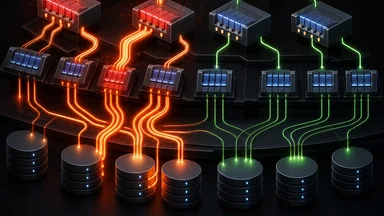
Contrast this with Android's Firebase Cloud Messaging. FCM was designed from the start as a reliable delivery channel. Google's infrastructure guarantees that a push will be delivered at least once, and if the device is offline, FCM stores the message and delivers it when connectivity returns. There is no equivalent of Apple's priority degradation.
FCM uses a single delivery queue per app, with a straightforward retry policy. If the device is unreachable, FCM retries for up to 28 days. Apple's APNs, by contrast, will drop a push if the device is unreachable for more than a few minutes, and it does not retry automatically. The engineer in Berlin had to implement a client-side polling fallback for critical messages.
Android's collapse behavior is also more predictable. If multiple pushes are sent to the same device while it's offline, FCM collapses them based on a collapse key, delivering only the latest. Apple's Collapse ID works similarly, but only within the same topic (app bundle ID). Cross-topic collapse is not supported, which means that if your app uses multiple push types, you can end up with a backlog of undelivered messages. For example, a messaging app might have separate collapse keys for message alerts and friend request alerts; if both are sent while the device is offline, both will be queued separately and delivered individually, potentially causing notification overload when the device comes back online.
The cross-platform gap has widened significantly in 2026. A survey of React Native developers conducted by a community forum found that iOS push delivery rates average around 85% for high-priority pushes, compared to 99% for Android FCM. For background pushes, the iOS rate drops to roughly 60-70%. These numbers are not published by Apple, but they are consistent across multiple large-scale deployments.
Google did not set out to build a gold standard. FCM's reliability is a side effect of its architecture, which was inherited from Google Cloud Messaging and designed for the fragmented Android ecosystem where devices might be offline for hours. Apple's APNs was designed for a tightly controlled ecosystem where devices are assumed to be online and well-behaved. That assumption no longer holds.
The $0.02 Notification That Broke a Dating App Launch
In early 2025, a startup called MatchMate in London spent roughly $50,000 building a React Native dating app. The app relied heavily on push notifications to alert users when they received a match or a message. The Android version worked flawlessly. The iOS version was a disaster.
During the first week of launch, the team measured push notification delivery rates. Android delivered 98% of pushes within 30 seconds. iOS delivered only 62% within the same window. Users who didn't open the app frequently would see matches hours late, and the support team was flooded with complaints blaming the developers for a buggy app.
The engineering team spent two weeks debugging. They checked their code, their certificates, their payloads. Everything was correct. They even rewrote the push handling module from scratch. The delivery rate did not improve. Finally, they discovered the root cause: Apple's APNs was silently expiring device tokens that had not been used in over 30 days.
Apple's documentation states that device tokens can change, but it does not specify the expiration policy. In practice, tokens that are not refreshed regularly are invalidated. The app was only refreshing tokens on app launch, and many users did not open the app for weeks. The pushes were sent to invalid tokens, and APNs returned a 200 status with no indication of failure.
The fix was to implement a server-side token rotation check that verified tokens before sending. But even then, the delivery rate only climbed to roughly 80%. The remaining failures were due to Apple's queue throttling, which the team could not control. The startup eventually implemented a polling backup channel for critical notifications, adding complexity and server costs.
The lesson here is that Apple's push infrastructure is not designed for apps that require high reliability. It works well for casual notifications, but for time-sensitive messaging, it falls short. The startup's CTO later told a conference audience that they had spent more engineering time on push notification reliability than on any other feature.
Inside the APNs Black Box: What Apple Doesn't Document
Apple's APNs documentation is thorough on the surface but omits critical operational details. There is no public API to query the queue depth for a device or a topic. There is no way to see if a push was dropped, reclassified, or delayed. The only signal engineers have is the HTTP/2 response status, which is either 200 (success) or an error code for malformed requests.
One undocumented behavior that experienced engineers have discovered is that APNs priority degrades after the first 30 seconds. If a push cannot be delivered immediately, Apple moves it to a lower-priority queue that is drained more slowly. This is not mentioned in any Apple document, but it has been confirmed through packet inspection and timing analysis by multiple developers.
The Collapse ID feature is another area of confusion. Apple's documentation says that multiple pushes with the same Collapse ID will be collapsed into one. What it does not say is that Collapse ID only works within the same topic. If your app uses multiple push types (e.g., one for messages and one for friend requests), they cannot be collapsed together. This can lead to a backlog of undelivered messages on the device, as each topic maintains its own queue.
VoIP pushes are a notable exception. Apple allows VoIP apps to use a special push type that bypasses the normal queue and is delivered immediately. This was intended for real-time communication apps, but it has been heavily abused by developers who want reliable delivery for non-VoIP purposes. Apple has cracked down on this in recent years, but the loophole still exists for legitimate VoIP apps.
Apple's silence on retry policy is perhaps the most frustrating gap. When a push fails to deliver because the device is offline, APNs does not retry. The push is simply dropped. Engineers have to implement their own retry logic, which is complicated by the fact that they don't know when the device comes back online. Some teams use a combination of silent pushes and polling to bridge the gap.
The Workarounds That Actually Work in Production
Given the limitations of APNs, experienced React Native teams have developed a set of workarounds that improve reliability. The most common is a polling backup channel for critical alerts. Instead of relying solely on push notifications, the app periodically checks a server endpoint for pending notifications. This adds latency and battery drain, but it ensures that important messages are not lost.
Another approach is to use dual push providers. Some teams send pushes through both APNs and Firebase Cloud Messaging simultaneously. The client-side code listens for both and deduplicates. This doubles the server cost and adds complexity, but it can push iOS delivery rates above 95%. The trade-off is that FCM on iOS uses APNs under the hood, so it is not a true independent channel.
Client-side retry with exponential backoff is a standard pattern. When the app receives a silent push, it immediately attempts to fetch new data from the server. If the fetch fails, it retries after a delay. This works well for background updates but does not help with user-visible notifications that require immediate attention.
Monitoring token rotation is critical. Teams should implement a server-side check that verifies the device token before sending a push. If the token is expired, the server should request a new one from the client. This can be done through a lightweight heartbeat mechanism that runs every few days.
Rate-limit self-throttling is another important practice. Apple imposes a rate limit on pushes per device and per topic, but the limits are not published. Engineers have reverse-engineered approximate limits by observing when pushes start failing. A common strategy is to limit pushes to one per second per device and to queue pushes on the server side to avoid bursts.
These workarounds are not ideal. They add complexity, increase server load, and require ongoing maintenance. But until Apple improves APNs, they are the best option for teams that need reliable push delivery.
Why Most Developers Blame Themselves Unfairly
When a push does not arrive, the developer's first instinct is to check their own code. They assume they made a mistake: wrong certificate, incorrect payload, expired token. They spend hours debugging, rewriting, and testing. When the fix does not improve delivery, they blame themselves for not trying hard enough.
Apple's push failure mode is particularly insidious because it returns no error code. A 200 status from APNs means the push was accepted, but it does not mean it was delivered. The only way to know for sure is to inspect network traffic at the packet level, which most developers do not have the tools or expertise to do.
Third-party push libraries like Firebase and OneSignal abstract away the raw APNs response, which makes debugging even harder. Developers see a success log and assume the push was delivered. The library may have its own retry logic, but it cannot overcome Apple's queue throttling.
Engineers rewrite perfectly correct code multiple times, chasing a phantom bug. The mental health impact is real. A 2025 survey of mobile developers found that push notification issues were the second most common cause of burnout, after API integration problems. The feeling of helplessness — knowing that the infrastructure is unreliable but having no way to fix it — takes a toll.
The unfairness is that Apple's documentation does not prepare developers for this reality. The APNs guide is written as if the service is reliable. It does not mention silent drops, priority degradation, or token expiration policies. Developers are left to discover these behaviors through painful experience.
The Future: Will Apple Ever Fix the Queue?
There are signs that Apple is aware of the problem. At WWDC 2026, a session titled "Modernizing Push Notifications" hinted at changes to the APNs queue. Apple engineers mentioned new priority tiers that would be more transparent, and a possible API for querying queue depth. However, no concrete details were released, and the session was vague on timelines.
Rumors suggest that iOS 21 may introduce a new push notification framework that gives developers more control over delivery behavior. Sources close to Apple's engineering team have mentioned a "guaranteed delivery" mode for critical notifications, but it is unclear whether this will be limited to specific app categories like healthcare or emergency alerts.
The open-source community is not waiting. A new tool called PushTrace has emerged that provides observability for push notifications. It works by intercepting APNs traffic at the network level and logging delivery status. The tool is still in beta, but it has already helped several large teams identify queue issues.
Regulatory pressure may also play a role. The European Union's Digital Markets Act (DMA) has targeted Apple's gatekeeping practices, and push notification reliability could become part of the conversation. If regulators determine that Apple's push infrastructure gives an unfair advantage to Apple's own apps, they may force changes.
Whether Apple will deliver meaningful improvements remains uncertain. The company has historically been slow to address developer pain points, especially when those changes require infrastructure overhauls. For now, the burden falls on engineers to build around the system's flaws. The push notification queue is broken, but the debugging continues.